
This is the official webpage of the Nordic Association for Semiotic Studies (NASS). NASS home area is constituted by Denmark, Estonia, Finland, Iceland, Latvia, Lithuania, Norway, Sweden.
The purpose of the Association is to promote the advancement of semiotics as an academic discipline and research domain in the Nordic and Baltic countries and within the international semiotic community, fostering academic cooperation and highlighting Nordic and Baltic contributions to the field. For this aim, NASS endorses contact and cooperation between its members, provides information on Nordic, Baltic and international academic activities within the field of semiotics, and facilitates the development of research collaboration and projects across institutional and national borders. We organize a regular, biennial conference circulating in the Nordic and Baltic region.
NASS also publishes a Newsletter with upcoming semiotics related events, new books and journals from both the Nordic countries and beyond.
To get in contact with NASS, please write to post@nordicsemiotics.org
We have a Facebook page, an X (Twitter) account and a LinkedIn profile.
Our latest, the 14th conference of the Nordic Association for Semiotic Studies, titled “Creativity – Complexity – Intelligence“ took place in Tallinn, Estonia, June 11–13, 2025, along with the 15th Annual Lotman Days. The conference was hosted by Tallinn University School of Humanities and Juri Lotman Semiotics Repository.
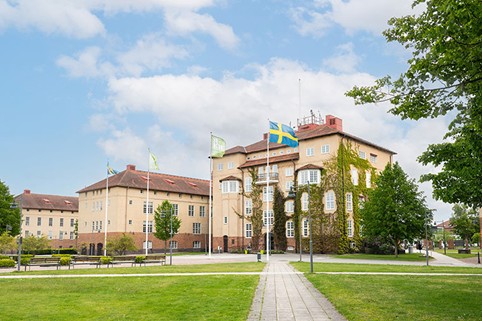
The next conference is set to take place at Kristianstad University, Sweden, June 16 to 18, 2027, titled as “Semiosis and Meaning in Motion: Semiotic Epistemologies and Experience”
Under the theme “Semiosis and Meaning in Motion: Semiotic Epistemologies and Experience,” the conference addresses how semiosis and meaning emerge, stabilize, and transform through embodied, cognitive, cultural, biological, and educational processes, and how different semiotic traditions investigate and conceptualize these movements. Both semiosis and meaning imply motion, yet they may relate differently to change. Semiosis involves ongoing processes that may stabilize as much as transform relations across biological, cognitive, and cultural domains. Meaning, by contrast, moves through experience, interpretation, and social negotiation, where even subtle shifts may reconfigure how worlds are perceived, inhabited, and shared. Motion, change and rest coexist with processes of meaning-making, from biological adaptation and cognitive development to artistic creation, cultural practice, and education.
Meaning emerges and moves through experience, knowing, and becoming, yet also stabilizes into habits, conventions, and shared understandings that sustain communication and learning. At the same time, meanings are never neutral. They move through relations of power, ideology, and truth.
As meanings circulate across media, institutions, and pedagogical spaces, they become stabilized as truths, norms, or identities. Yet these stabilizations are always challenged, reinterpreted, and reanimated through human and ecological practices. To study meaning in motion is therefore also to engage critically with the politics and ethics of meaning—how truth-values are shaped, how authority is performed, and how meaning can be opened toward plurality and transformation.
Semiosis does not merely transmit information or represent worlds; it participates in the organization and transformation of relations between organisms, environments, technologies, and forms of life. From embodied interaction and affective responsiveness to symbolic practices and institutional structures, semiosis involves dynamic processes through which relations are established, maintained, disrupted, and reorganized.
The conference also invites epistemological reflection within semiotics itself. What kinds of knowledge do different semiotic traditions produce? How do our models, metaphors, and analytical frameworks participate in the sign processes they describe? How might semiotics contribute to broader discussions of knowledge, experience, learning, and ecological relations in contemporary society? In this way, the conference seeks to open a reflexive dialogue on semiotic inquiry as an evolving practice of knowing—one that both investigates and participates in the movements of meaning it seeks to understand.
More information available here.
VARIOUS CALLS FOR PAPERS PUBLISHED ON REQUEST
Webmaster: Lauri Linask (post@nordicsemiotics.org)