
The 15th conference of the Nordic Association for Semiotic Studies
June 16 to 18, 2027
Semiosis and Meaning in Motion: Semiotic Epistemologies and Experience
We are pleased to announce that the next conference of the Nordic Association for Semiotic Studies will be held at Kristianstad University, Sweden, June 16 to 18, 2027.
Kristianstad and Kristianstad University
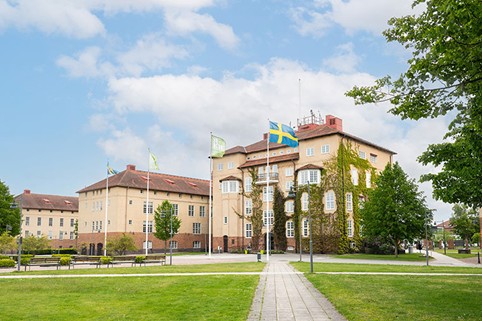
Located in the vibrant city of Kristianstad in southern Sweden, about 80 kilometers from Lund and 100 kilometers from Malmö, with direct commuter trains from Copenhagen Airport (Kastrup), Kristianstad University offers an inspiring setting for academic exchange and collaboration.
The university is known for its strong commitment to high-quality education, interdisciplinary research, and close connections with society. Kristianstad itself is a charming and welcoming city, combining a rich cultural heritage with beautiful natural surroundings, including nearby beaches, wetlands, and nature reserves. With its relaxed atmosphere, excellent accessibility, and renowned Scandinavian hospitality, Kristianstad provides an ideal environment for scholars to connect, exchange ideas, and enjoy a memorable conference experience.
The call for papers will appear in Autumn 2026, but here is a sneak peek for those curious about the conference topic!
The 2027 NASS Conference invites scholars to explore semiotic processes as dynamic relations of reaction, knowing, and experience, and to reflect critically on semiotic epistemologies and the foundations of semiotic inquiry itself.
Under the theme “Semiosis and Meaning in Motion: Semiotic Epistemologies and Experience,” the conference addresses how semiosis and meaning emerge, stabilize, and transform through embodied, cognitive, cultural, biological, and educational processes, and how different semiotic traditions investigate and conceptualize these movements. Both semiosis and meaning imply motion, yet they may relate differently to change. Semiosis involves ongoing processes that may stabilize as much as transform relations across biological, cognitive, and cultural domains. Meaning, by contrast, moves through experience, interpretation, and social negotiation, where even subtle shifts may reconfigure how worlds are perceived, inhabited, and shared. Motion, change and rest coexist with processes of meaning-making, from biological adaptation and cognitive development to artistic creation, cultural practice, and education.
Meaning emerges and moves through experience, knowing, and becoming, yet also stabilizes into habits, conventions, and shared understandings that sustain communication and learning. At the same time, meanings are never neutral. They move through relations of power, ideology, and truth.
As meanings circulate across media, institutions, and pedagogical spaces, they become stabilized as truths, norms, or identities. Yet these stabilizations are always challenged, reinterpreted, and reanimated through human and ecological practices. To study meaning in motion is therefore also to engage critically with the politics and ethics of meaning—how truth-values are shaped, how authority is performed, and how meaning can be opened toward plurality and transformation.
Semiosis does not merely transmit information or represent worlds; it participates in the organization and transformation of relations between organisms, environments, technologies, and forms of life. From embodied interaction and affective responsiveness to symbolic practices and institutional structures, semiosis involves dynamic processes through which relations are established, maintained, disrupted, and reorganized.
The conference also invites epistemological reflection within semiotics itself. What kinds of knowledge do different semiotic traditions produce? How do our models, metaphors, and analytical frameworks participate in the sign processes they describe? How might semiotics contribute to broader discussions of knowledge, experience, learning, and ecological relations in contemporary society? In this way, the conference seeks to open a reflexive dialogue on semiotic inquiry as an evolving practice of knowing—one that both investigates and participates in the movements of meaning it seeks to understand.
We will welcome papers on topics of interest, including but not limited to:
- Semiotic epistemologies and theories of semiosis;
- Motion, stabilization, and sedimentation in semiotic dynamics;
- Relations between semiosis, experience, and knowing;
- Processes of interpretation, mediation, and inquiry;
- Empirical and practice-based studies of semiotic processes in biological, cognitive, cultural, and educational contexts;
- Habit, memory, and transformation in biological, cognitive, and cultural semiosis;
- Embodiment, affect, perception, and interaction in semiotic processes;
- Human and non-human semiosis across ecological and technological environments;
- Semiotics of learning, education, and developmental processes;
- Truth, ideology, and the politics of meaning and interpretation;
- Artistic, aesthetic, and performative dimensions of semiosis and experience;
- Language, non-language, and multimodal forms of semiosis;
- Semiotics of digital mediation, artificial intelligence, and algorithmic cultures;
- Ecosemiotic and biosemiotic perspectives on continuity, adaptation, and change;
- Semiotic methods and interdisciplinary approaches to experience and knowledge formation